
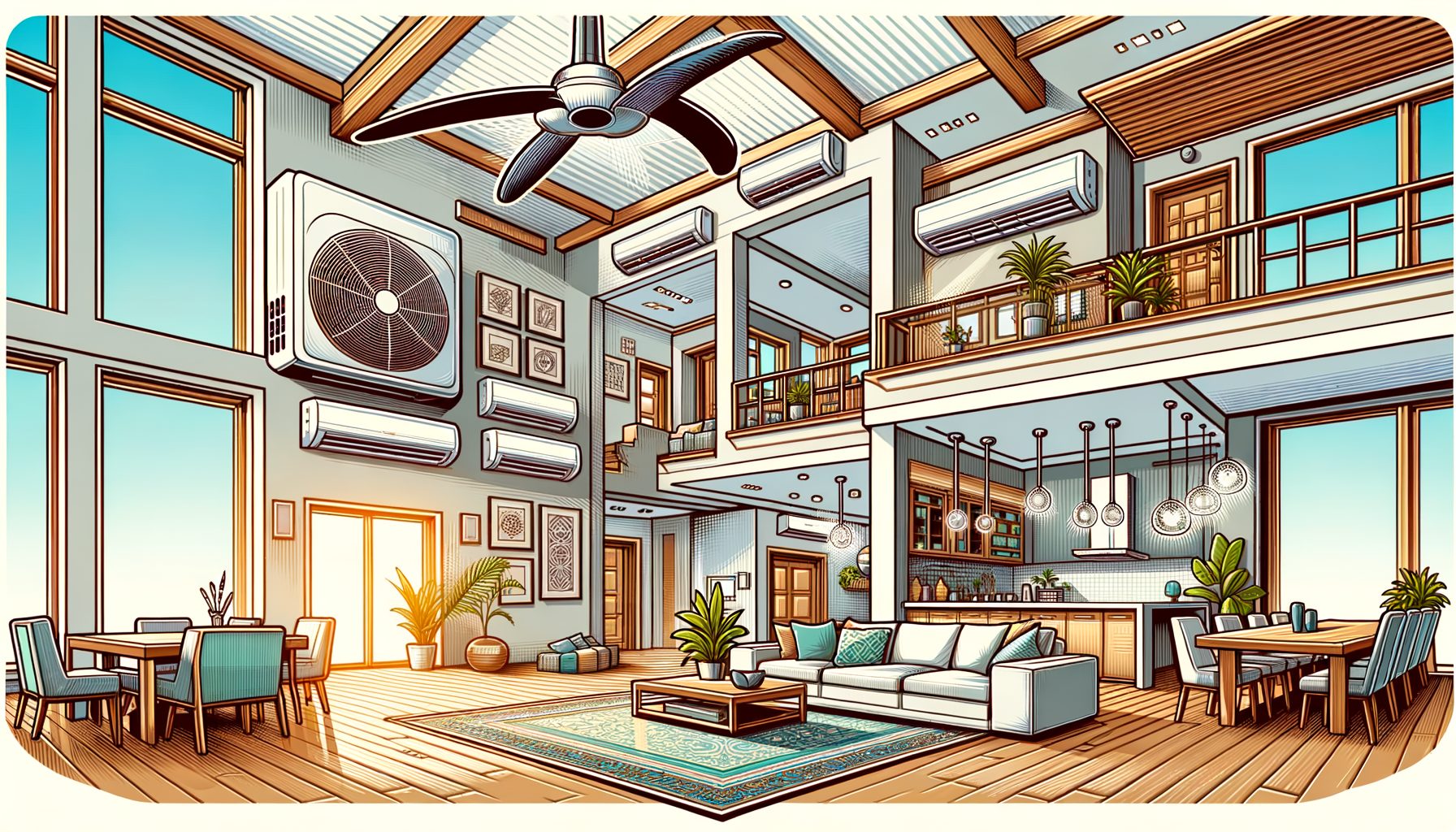
Live in a big house or a modern open-concept space? You’ve probably felt hot spots in summer, chilly corners in winter, and watched energy bills climb. Here’s the core challenge: big volumes of air and wide rooms resist even conditioning. In this guide to the best air conditioners for large homes and open floor plans, you’ll learn how to choose the right system type, what features actually matter, and how to size and design your setup so it feels comfortable everywhere—without wasting energy or money.
Why Large Homes and Open Floor Plans Are Hard to Cool (and What to Do About It)
Open layouts invite natural light and shared spaces—but they also mix different heat sources and airflow patterns. Sun-facing glass heats the room, cooking adds internal gains, and high ceilings create stratification (hot air rising, cool air pooling). In large homes, long duct runs can bleed pressure, and a single thermostat can’t “see” temperature differences across zones. The result: uneven cooling, humidity that lingers, noisy blasts of air, and short-cycling that wears out equipment.
The usual rule-of-thumb sizing (like BTU per square foot) doesn’t work well here. The right approach is a room-by-room Manual J load calculation that includes window area and orientation, insulation levels, infiltration, and occupancy. That points toward smarter choices like zoning, variable-speed compressors, and better duct design, plus controls that balance comfort across time and space. Data backs this up: the U.S. Department of Energy notes that correct sizing and duct sealing can reduce energy use by 10–20% while improving comfort. Oversized units cycle off before properly dehumidifying, leaving your space cool but clammy—a common complaint in open plans.
Use the table below as a starting point, not a prescription. It outlines typical ranges and targets that HVAC designers validate with on-site calculations and commissioning.
| Approx. Conditioned Area | Estimated Cooling Capacity | Airflow Target | Suggested Zones | Noise Goal (Indoor) |
|---|---|---|---|---|
| 185–280 m² (2,000–3,000 ft²) | 8.8–12.3 kW (2.5–3.5 tons) | 1,000–1,400 CFM | 2–3 | ≤ 40–45 dB(A) |
| 280–370 m² (3,000–4,000 ft²) | 12.3–17.6 kW (3.5–5 tons) | 1,400–2,000 CFM | 3–4 | ≤ 38–45 dB(A) |
| 370–465 m² (4,000–5,000 ft²) | 17.6–21.1 kW (5–6 tons) | 2,000–2,700 CFM | 4–6 | ≤ 35–45 dB(A) |
As you scale up, the winning formula stays consistent: accurate load calculations, capacity that matches real conditions, and controls that actively manage zones. Prioritize technology that can throttle, not just blast—because open-concept comfort is about precision and persistence, not brute force.
Key Features That Matter: Variable Speed, Zoning, Dehumidification, and Smart Controls
If you want even temperatures and low energy bills in a large or open home, look for five core features. First, variable-speed or inverter compressors. These modulate output from low to high, maintaining steady temperatures and wringing more moisture from the air at slower speeds. They also cut noise and reduce short-cycling, which extends equipment life. Second, zoning. Use multiple air handlers (in ductless or ducted mini-splits) or a zoned central system with motorized dampers and multiple thermostats. Zoning ensures the great room, kitchen, upstairs loft, and bedrooms can each get the airflow they need at the time they need it.
Third, dehumidification strategy. High latent loads in open kitchens and sunrooms demand good coil design and long, low-speed runtimes to pull moisture. Aim for systems with dedicated dehumidify modes or controls that allow lower fan speeds during mild weather. Maintaining indoor relative humidity around 40–55% increases comfort at slightly higher temperatures, which also saves energy. Fourth, efficiency ratings. For cooling, look for higher SEER2 and EER2; for heat pumps, check HSPF2. While minimum standards vary by region, many large homes benefit from SEER2 16–20+ to keep operating costs in check. Verify ratings and rebates via ENERGY STAR and your local utility to reduce upfront costs.
Fifth, airflow and filtration. Large systems need proper CFM (typically 350–450 CFM per ton), wide, smooth ducts, generous return air pathways—especially in open layouts—and filters sized for low pressure drop. A high MERV rating (MERV 11–13 for homes) improves air quality but must be paired with adequate filter surface area to avoid starving the blower. To wrap up, add smart controls: multi-room sensors, occupancy detection, and geofencing thermostats. Paired with inverter equipment, smart scheduling and temperature averaging reduce swings in big spaces. Pro tip: request static pressure and airflow readings during commissioning; these numbers tell you if your “features on paper” are actually working in your home.
The Best System Types for Large, Open Layouts (Pros, Cons, and Use Cases)
Central air with zoning is a classic for larger homes. A high-efficiency, variable-speed central system plus a zoning panel can serve multiple areas via one set of equipment. Pros: a clean look, one outdoor unit, and compatibility with existing ductwork. Cons: retrofitting ducts for open spaces can be noisy or leaky if not redesigned; poorly sized zones can still lead to hot and cold spots. It shines when ducts are well-planned, returns are abundant, and dampers are balanced by a pro.
Ductless and ducted mini-split heat pumps excel in open plans. Multi-zone systems let you place slim indoor units where the load actually is—like a fan coil near the great room’s high window wall and a concealed ducted unit for bedrooms. Pros: superb part-load efficiency (thanks to inverters), precise zoning, and quiet operation. Cons: visible wall cassettes aren’t everyone’s style, and multi-split capacity sharing requires careful sizing so simultaneous cooling doesn’t overwhelm the outdoor unit. That path is especially strong for additions, tall spaces, and mixed-use zones.
High-velocity small-duct systems use compact, insulated ducts to deliver conditioned air through small outlets. Pros: minimal visual impact and excellent mixing that reduces stratification in tall rooms. Cons: higher cost and the need for careful sound attenuation. They’re great in historic or architecturally sensitive homes where standard ducts are impractical. For maximum efficiency and comfort, choose versions with variable-speed compressors and ECM blowers.
Geothermal (ground-source) heat pumps deliver premium efficiency and superb humidity control. Pros: very low operating costs and quiet operation. Cons: higher upfront cost due to ground loops or wells. Geothermal can be ideal for large properties with land for horizontal loops or access for drilling. Whether you go central, mini-split, high-velocity, or geothermal, a heat pump option can also cover heating, reducing or replacing fossil fuel usage—especially with cold-climate models designed for low outdoor temperatures.
Sizing and Design: The Practical Steps That Make or Break Comfort
Start with a professional Manual J load calculation and ask for a room-by-room report. Doing so sets capacity by actual gains and losses, not guesswork. Next is Manual S (equipment selection), which maps that load to inverter or two-stage equipment that can modulate during mild weather. Then Manual D (duct design) and T (air distribution) specify supply and return sizing, velocities, and diffuser placement. In open plans, returns are critical; undercut doors aren’t enough. Use dedicated return paths to prevent pressure imbalances and ensure the whole space “breathes” evenly.
Commissioning matters. Ask your contractor to document total external static pressure, supply/return temperatures, delivered CFM per room, and refrigerant charge per the manufacturer’s specs. Poor airflow starves even the best equipment. Target 350–450 CFM per ton, with quiet registers and balanced dampers—especially if the kitchen and great room share a thermostat. Where practical, place thermostats away from direct sun or cooking zones and consider remote sensors. For stratification in high-ceiling areas, use ceiling fans on low speeds to destratify and leverage the system’s low-speed operation for steady comfort.
Don’t skip envelope improvements. Window films, shading, improved attic insulation, and air sealing reduce the load so your AC doesn’t have to work as hard. Even a 10–15% reduction in peak load can let you choose a smaller, quieter unit that costs less to run. Lastly, plan for maintenance: easy filter access, washable drain pans, and service clearances around equipment. A clean system is a quiet, efficient system. These steps align with best practices from ACCA and ASHRAE, and they’re the difference between “it cools” and “it feels great everywhere.”
Frequently Asked Questions
Q: How many tons of AC do I need for a 4,000 ft² (≈370 m²) open-plan home?
A: It depends on windows, insulation, orientation, and occupancy. Many homes that size land between 5–6 tons—but that’s only a starting range. Get a Manual J load calc to avoid oversizing, which causes poor dehumidification and uneven comfort. A zoned inverter system often delivers better comfort than a single large unit.
Q: Are mini-splits better than central air for open layouts?
A: Mini-split heat pumps are excellent for open spaces because inverter technology modulates output and zoning is straightforward. Central air can match comfort with proper zoning, variable-speed equipment, and a well-designed duct system. The best choice often depends on whether you already have good ducts and how visible you’re willing to let indoor units be.
Q: What SEER2 rating should I target?
A: Aim for SEER2 16–20+ for large homes where runtime is significant. Higher SEER2 paired with good design and commissioning matters more than headline ratings alone. Check utility rebates and ENERGY STAR criteria to improve payback. Remember EER2 is a good indicator of peak-day performance.
Q: How do I fix humidity issues in a big, open home?
A: Choose variable-speed equipment, allow longer low-speed runtimes, and ensure the system isn’t oversized. Add dedicated dehumidify modes and keep fan speeds modest during shoulder seasons. Seal ducts, maintain filters, and verify condensate drainage. If the kitchen and sunroom drive moisture, treat them as their own zones so the system can focus there when needed.
Q: Is a heat pump a good idea if I also need heating?
A: Yes. Modern cold-climate heat pumps can heat efficiently in low temperatures and cool effectively in summer, often replacing two systems with one. Pair with proper zoning and, in colder regions, consider a dual-fuel or auxiliary strategy for extreme days. Look at HSPF2 ratings and local climate data to decide.
Conclusion
The big idea in this guide is simple: large homes and open floor plans demand precision, not just power. You now know why these spaces are challenging—stratification, mixed heat gains, long duct runs—and exactly how to solve them with the right features and design. Variable-speed compressors keep temperatures steady and humidity low; zoning brings airflow where it’s needed; smart controls smooth out hot spots; and proper sizing and commissioning ensure the system you buy performs as promised. Whether you choose a zoned central system, a multi-zone mini-split, a high-velocity setup, or geothermal, success starts with a Manual J calculation and finishes with measured airflow, balanced zones, and easy maintenance.
Ready to act? Start by booking a professional load calculation, then get at least three bids that include Manual S/D/T documentation and commissioning reports. Ask contractors to list expected CFM per room, static pressure targets, and thermostat strategies. Check local rebates and tax credits, compare SEER2 and EER2, and choose equipment that modulates. If you’re upgrading in phases, tackle envelope improvements and returns first to reduce the size—and cost—of the final system. Keep a seasonal maintenance checklist for filters, coils, and drains to protect your investment.
Comfort that feels “quietly perfect” day after day is absolutely achievable in a big, open home. Make decisions based on data, not rules of thumb, and your AC will reward you with lower bills, fewer hot spots, and better air quality. What’s the one zone in your home that needs attention first—the sunny great room, the upstairs loft, or the kitchen hub? Map it, plan it, and take your next step today.
Helpful resources and further reading:
ENERGY STAR: Heating & Cooling
U.S. Department of Energy: Central Air Conditioning
/P>ACCA Manuals J, S, D, and T
ASHRAE Handbook (comfort and HVAC design)
Sources:
U.S. Department of Energy. Central Air Conditioning. https://www.energy.gov/energysaver/central-air-conditioning
ENERGY STAR. Heating & Cooling Products. https://www.energystar.gov/products/heating_cooling
ACCA. Residential HVAC Design Manuals (J, S, D, T). https://www.acca.org/standards/technical-manuals
ASHRAE. Handbook Series and Comfort Guidance. https://www.ashrae.org/technical-resources/bookstore/ashrae-handbook
International Energy Agency. The Future of Cooling. https://www.iea.org/reports/the-future-of-cooling