
When the heat is on, few things are more frustrating than a room that just won’t cool down. Many people crank the unit, slam vents shut, or plunge the thermostat to a very low number—results often disappoint, and bills climb. Real relief begins with understanding how air conditioners move heat, why humidity shapes comfort, and which simple steps boost performance right away. In the pages below, you’ll get a plain-language tour of Air Conditioner Cooling, practical tips you can use today, and guidance on when to tweak, maintain, or upgrade so your space stays truly comfortable.
The science of air conditioner cooling: how the refrigeration cycle actually removes heat
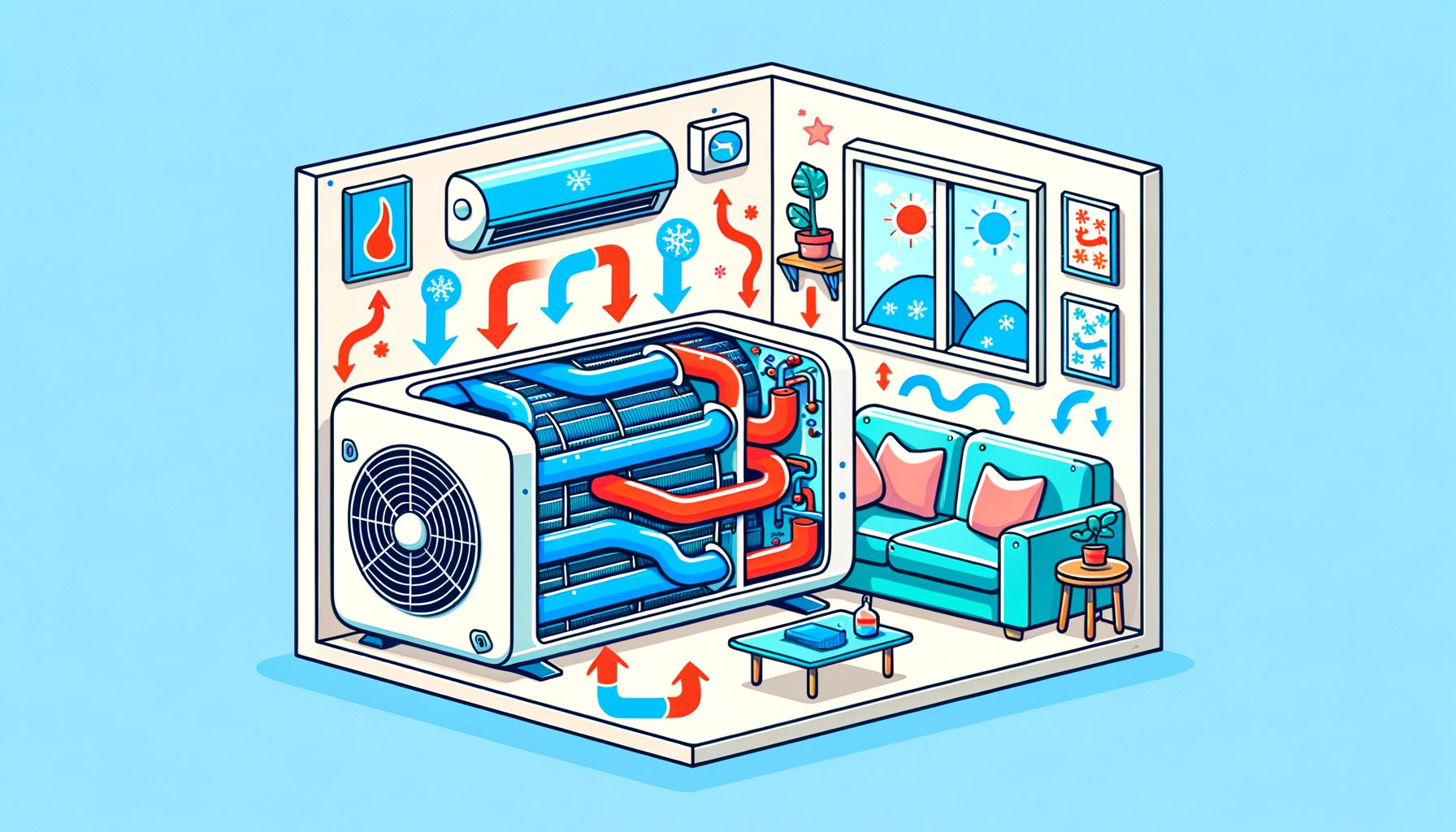
An air conditioner doesn’t “create cold.” It moves heat. The indoor section absorbs heat from room air, then the system transports it outdoors and releases it. All of that happens via a closed-loop refrigeration cycle built around a special fluid called refrigerant. Think of refrigerant as a heat courier: it evaporates inside to pick up heat and condenses outside to drop that heat off.
Here’s the simple path: The evaporator coil (indoor) runs cold. Warm room air passes over it; the refrigerant inside absorbs the heat and evaporates. That vapor travels to the compressor, which squeezes it—raising its temperature and pressure. Next stop is the condenser coil (outdoor), where a fan blows outside air across the hot coil, and the refrigerant releases the heat and returns to liquid. Finally, the liquid passes through an expansion device that drops its pressure and temperature before returning to the evaporator. Round and round, the system relocates heat from your room to the outdoors.
Cooling has two parts: sensible heat (temperature change) and latent heat (moisture removal). During dehumidification, water vapor in the air condenses on the cold evaporator coil and drains away. That’s why ACs help you feel comfortable even at slightly higher thermostat settings; lower humidity reduces that sticky feeling and improves perceived comfort level. According to comfort standards like ASHRAE 55, most people feel best around 40–60% relative humidity.
Typical operating ranges, simplified:
| Component | Role | Typical Temperature Range |
|---|---|---|
| Evaporator Coil (indoor) | Absorbs heat from room air | 4–10°C (39–50°F) coil surface |
| Compressor | Raises refrigerant pressure and temperature | Outlet vapor often 60–90°C (140–194°F) |
| Condenser Coil (outdoor) | Dumps heat outside | 10–20°C (18–36°F) above outdoor air |
| Expansion Device | Drops pressure/temperature before the evaporator | Liquid line drops to cold mix entering evaporator |
Two quick notes. First, the thermostat acts like a manager, not a turbo button. Lowering the setpoint doesn’t cool faster; it only extends runtime. Then this: airflow is the unsung hero. Restricted airflow (dirty filters, closed vents, blocked returns) starves the evaporator of warm air and can even cause coil freeze-ups. If your system ices over, turn it off, let the ice melt, replace the filter, and check vents before restarting. For a deeper dive on how ACs move heat, the U.S. Department of Energy offers an excellent overview at Energy Saver.
Why your room feels cool: airflow, humidity, and comfort in the real world
Comfort is more than a number on the thermostat. Airflow and humidity decide whether your room feels crisp or clammy. Without circulation, cold air can pool near the unit while distant corners stay warm. If humidity remains high, sweat evaporates slowly, and you’ll feel hotter than the display suggests.
Begin with airflow basics. Supply vents push conditioned air into the room; return vents pull air back to the system. Keep both open and unobstructed. Avoid blocking vents with large furniture, curtains, or boxes. In rooms with a single supply, a ceiling fan set counterclockwise helps mix the air so the cool doesn’t stagnate at floor level. Fans don’t lower the actual temperature, but they increase heat loss from your skin—so you can bump the thermostat up a couple of degrees and feel just as comfortable.
Humidity deserves attention next. Your air conditioner naturally removes moisture as it runs, but it needs enough runtime to do the job. Oversized systems may short-cycle—cooling the room quickly yet shutting off before pulling out much moisture. The result: cold but sticky air. What’s interesting too: in humid climates, running at a slightly lower fan speed (if your system allows) or adding a dedicated dehumidifier can improve comfort. Also address infiltration—seal big air leaks around windows and doors, and keep windows shut during humid hours to keep moisture out in the first place. ENERGY STAR has guidance on sealing and duct improvements at ENERGY STAR: Seal Air Leaks.
Sunlight and internal heat sway comfort more than many expect. Close blinds or shades during peak sun. LED lighting and efficient electronics cut heat gain. Cooking? Use the range hood to exhaust heat and moisture. In multi-room spaces, keep interior doors slightly open to help returns “see” the air—especially if there’s only one main return in the hallway.
Consider a real-world scenario: A small bedroom at the end of a hallway stays hot while the rest of the home feels fine. The supply vent is clear, but the door stays shut and there’s no dedicated return. The fix: undercut the door slightly or install a transfer grille so air can flow back when the door is closed. Result: steadier temperatures, less fan noise, and fewer hot spots—without touching the thermostat.
Sizing and efficiency: get the right capacity and use energy wisely
Capacity matters a lot. Air conditioners are rated in BTU/h or “tons” (1 ton = 12,000 BTU/h). A rough rule of thumb is 20 BTU per square foot for a typical, decently insulated room, but that’s only a starting point. Window size, insulation, occupants, climate, and sun exposure all swing the load. For best results, pros use a Manual J (or similar) load calculation to select the right size. Why it matters: an undersized unit struggles on hot days, while an oversized one short-cycles, wastes energy, and leaves humidity high.
Efficiency metrics help you compare systems. SEER or SEER2 reflects seasonal efficiency for cooling; higher numbers mean less electricity for the same output. EER is a snapshot efficiency at specific conditions. Heat pumps also use COP (coefficient of performance), and many modern “mini-split” inverter systems adjust speed to match the load—improving comfort and trimming energy use. As a simple guide, upgrading from an older SEER 10 system to SEER 16 can reduce cooling energy use by roughly 30–40% depending on climate and duct design.
Smart operation counts just as much as efficient hardware. Set your thermostat to the highest comfortable temperature (many find 24–26°C / 75–78°F comfortable with good airflow and humidity control). Use scheduled setbacks when you’re away, but avoid dramatic swings in very humid climates to prevent the space from re-saturating with moisture. Keep interior doors at least slightly open if you have a central return. If you use a smart thermostat, enable features like adaptive recovery so the system pre-cools gradually instead of blasting right before you arrive.
Ductwork can be the silent energy thief. Leaky, uninsulated ducts—especially in hot attics—can lose 20–30% of your cooling before it reaches the rooms. Sealing and insulating ducts pays back fast, according to the DOE and ENERGY STAR. Well, here it is: if you’re choosing new equipment, consider inverter-driven systems, right-sized capacity, and a high SEER2 rating that fits your climate and budget. For helpful shopping context, see the DOE’s cooling efficiency guidance: DOE: Room Air Conditioners and DOE: Heat Pump Systems.
Maintenance and troubleshooting: easy wins before calling a pro
Routine care keeps systems cooling better and costing less. The simplest habit: change or clean your air filter regularly. In dusty areas or homes with pets, check monthly and replace as needed (typically every 1–3 months). A clogged filter reduces airflow, which can cause weak cooling, coil icing, and higher bills. Also clear leaves and debris from the outdoor unit; it needs open air to dump heat. Maintain at least 60 cm (2 feet) of clearance around it and gently rinse the coil fins with a garden hose if they’re dirty (power washers can damage fins—avoid).
If the AC runs but the room stays warm, walk through a quick checklist: Is the thermostat set to “Cool” and the fan on “Auto”? Is the filter clean? Are supply and return vents open and unobstructed? Is the outdoor fan spinning with warm air blowing out the top or side? Do you see ice on the indoor lines or coil? If ice appears, turn the system off to thaw and restore airflow before restarting. If everything looks normal but cooling remains weak, you may be facing low refrigerant, a failing capacitor, a stuck contactor, or a blower issue—situations best handled by a certified technician.
Condensate issues are another common trouble spot. Water under the indoor unit usually points to a blocked drain line. Many lines have an accessible cleanout; flushing with warm water and a small amount of vinegar can help keep algae at bay. In humid climates, ensure the drain has proper slope and consider a float switch (shuts the system off if the pan fills) to prevent water damage.
Refrigerant handling is regulated for safety and environmental reasons. If you suspect a leak or need a recharge, call a licensed pro. The U.S. EPA explains technician certification and refrigerant rules here: EPA Section 608. For annual upkeep, a professional tune-up that checks refrigerant pressures, superheat/subcooling, electrical connections, and coil cleanliness can improve performance, extend equipment life, and catch small issues before they become expensive failures.
Q&A: common questions about air conditioner cooling
Q: Why does my AC run but the room isn’t cooling?
A: Start with airflow: a dirty filter, blocked return, or closed vents can tank performance. Next, check the outdoor unit for debris and make sure the fan runs. If air is cool but weak, a blower problem is likely. If it blows warm, refrigerant or compressor trouble may be the culprit—time to call a pro.
Q: Is it cheaper to leave the AC on all day or turn it off?
A: In most cases, a smart schedule wins. Let the temperature rise modestly when you’re away, then cool back before you return. Huge set-up/downs in humid areas can invite moisture back in, so keep setbacks moderate (2–4°C / 3–7°F) for comfort and savings.
Q: What’s the ideal temperature and humidity for comfort?
A: Many people feel good around 24–26°C (75–78°F) with 40–60% relative humidity. If humidity is high, you might need a lower setpoint or improved dehumidification to feel the same comfort. ASHRAE comfort guidelines support this range for most occupants.
Q: How often should I service my AC?
A: Replace/clean filters every 1–3 months, clear debris from the outdoor unit as needed, and schedule a professional check once a year before peak season. Regular maintenance improves efficiency and helps avoid surprise breakdowns.
Conclusion: from hot and frustrated to cool and in control
We covered how air conditioner cooling really works—the refrigerant cycle that moves heat out of your home, the crucial role of airflow and humidity, why right-sizing and efficiency matter, and the maintenance steps that prevent most cooling headaches. With a few simple changes, “AC running but not cooling” can become steady comfort and lower bills.
Your action plan today: 1) Check and replace your filter if it’s dirty. 2) Clear at least 60 cm (2 ft) around the outdoor unit and gently rinse the coil. 3) Open supply and return vents, crack doors for better return airflow, and set ceiling fans counterclockwise. 4) Close blinds during the hottest hours to cut heat gain. 5) Set a smart, moderate schedule on your thermostat (and enable adaptive recovery if available). If your system still struggles, consider a pro tune-up, duct sealing, or an upgrade to an inverter-driven, right-sized unit with a higher SEER2 rating for long-term efficiency.
Small tweaks yield big results. Good airflow and humidity control make the same thermostat number feel dramatically better. Right-sized equipment avoids short cycling, improves dehumidification, and keeps you comfortable even on the hottest days. And routine maintenance remains the easiest, cheapest way to protect your investment.
If this guide helped, take five minutes to do steps 1–3 right now. Then bookmark the resources below for deeper dives into sizing, efficiency, and care. You’ll feel the difference in comfort—and see it on your next energy bill. Your room can be calm, cool, and collected; the know-how is now in your hands. Ready to breathe easier and chill smarter?
Sources and further reading:
U.S. Department of Energy – Central Air Conditioning: https://www.energy.gov/energysaver/central-air-conditioning
U.S. Department of Energy – Room Air Conditioners: https://www.energy.gov/energysaver/room-air-conditioners
U.S. Department of Energy – Heat Pump Systems: https://www.energy.gov/energysaver/heat-pump-systems
ENERGY STAR – Seal Air Leaks: https://www.energystar.gov/saveathome/seal-air-leaks
ASHRAE Standard 55 – Thermal Environmental Conditions for Human Occupancy: https://www.ashrae.org/technical-resources/standards-and-guidelines
U.S. EPA – Section 608 Refrigerant Management: https://www.epa.gov/section608